
EVSE (Electric Vehicle Supply Equipment) Tester – EVSE Test Box
The tester start-up protection functional testing cable testing communication testing enables
Since 2020
Electric Vehicle Test Equipment Solutions
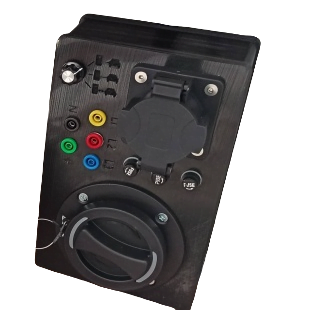
This test box lets you step manually and thoroughly through the states used by an SAE J1772 charging station (EVSE). It includes a function to verify operation of the Proximity Pilot (PP) switch controlled by the connector latch, and it can also simulate an earth (ground) fault.
Electric Vehicle Charger Tester
This easy-to-use EV charger tester works without any additional power source. It is simple to operate and can simulate the vehicle’s communication unit, so you can directly check whether the charger detects the charging cable and starts the charging process. Built-in fuses make it safe, protecting against overload and short circuits, and the easily replaceable fuse makes it practical and convenient.
1 – No additional power source required
2 – Easy to use
3 – Manual triggering
4 – Safe
5 – Saves time
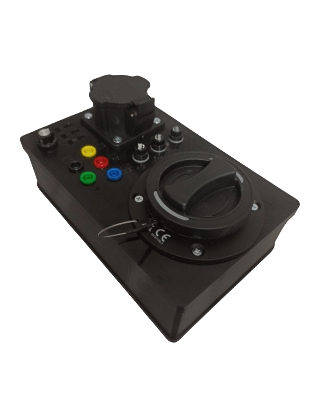
Portable EV Charger Test Unit
This EVSE test unit is fully portable and lets you test your charger without an electric vehicle. You can identify cable faults, signal faults and earth faults within seconds. A selector switch lets you reproduce vehicle states such as ‘vehicle connected’ and ‘charging started’, just like a real car.
Compatible with Type 1 and Type 2 Charging Connectors
Compatible with Type 1 (SAE J1772) and Type 2 (IEC 62196-2) charging connectors, so you can test both single-phase and three-phase chargers without an adapter – saving time during testing.
Features
- Portable, compact design
- Overcurrent protection
- Replaceable fuses
- High-quality flame-retardant 16 A – 32 A connector
- ABS enclosure
- Selectable switch modes (disconnected, connected, charging)
- Single-phase (Type 1), three-phase (Type 2) and single/three-phase models available
- RoHS compliant
How to Use
Once the plug is connected, the selector switch functions are as follows:
State A – Cable Disconnected
You can check the earth connection. If you see any voltage at the banana connectors, there is a wiring fault and the charger should not be used with your car. You can see standard device tests in the video.
State B – Cable Connected
The CP voltage varies depending on the device, and you can see the corresponding indicator on your EVSE. If you measure any voltage at the banana connectors, there is a problem, and you should check your EVSE connections.
State C – Charging Started
This step triggers the EVSE and you will see voltage at the banana connectors. If no phase voltage appears, there is a problem with your EVSE.
The tester also has a fuse on each phase, protecting your equipment from unexpected problems when you use it as a load simulator.