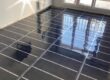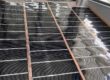
With long winters and rising heating costs, carbon film underfloor heating is one of the first choices for anyone looking for a clean, safe and comfortable solution. In this article we explain what a carbon film heating system is, the benefits of underfloor heating, where it is used and how it is installed, step by step.
What Is a Carbon Film Heating System?
For technical details, see also what is a carbon film heater?
A carbon film heater consists of conductive carbon strips laminated between two thin polymer layers. Copper busbars along the edges distribute electricity to the carbon strips. When current flows, the carbon layer heats up and spreads the heat evenly across the whole surface.
The film is extremely thin, so it can be laid under parquet, laminate or carpet without raising the floor.
The Benefits of Underfloor Heating
1. Programmable Heating
The system is controlled by a room thermostat and can be programmed to switch on and off at the times you choose. This delivers significant savings in spaces used at specific times, such as mosques, cemevis and churches. For more on this, see our mosque heating article.
2. Long Life
Carbon films have no moving parts. With correct installation and thermostat control, they run trouble-free for many years, and quality products come with a manufacturer’s warranty.
3. Economical Use
Because heat spreads evenly from the floor, the same comfort is achieved at a lower thermostat setting than with systems that heat the air. There is also no boiler, pump or flue to maintain. To calculate actual consumption, see our underfloor heating electricity consumption guide.
4. Time Saving
The thermostat maintains the temperature automatically – no need to add fuel to a stove or keep adjusting the system. You can browse and order a suitable thermostat on our Oxa room thermostat (32 A) page.
5. Space Saving
Because the heater sits beneath the floor, it takes up no space in the room. With no radiators or stoves, you are free to arrange furniture as you like.

6. Easy Cleaning
No stove soot, ash or dust collecting behind radiators. With little air circulation, less dust moves around the room.
7. A Healthy Environment
Underfloor heating keeps feet warm and the head cool – widely regarded as the most comfortable temperature profile for the human body. With no drying warm-air currents, the room feels more balanced.
8. Comfort
Children and pets can play comfortably on the warm floor, and the same temperature is felt throughout large spaces.

9. Safety
When carbon films are controlled by an electronic thermostat and floor sensor, the surface temperature remains stable and safe. With no open flames or hot surfaces, the risk of burns and fire is reduced. Installation must always be on an electrical circuit protected by an RCD.
Where Is Carbon Film Underfloor Heating Used?
Homes, offices, schools, nurseries, mosques and prefabricated buildings are the main applications. Floor heating is a long-standing tradition in countries such as South Korea and Japan, and it has been spreading rapidly in Türkiye in recent years. We compare options for workplaces in our office heating systems article.
How Is Carbon Film Installed?
- Floor preparation: Carpets are lifted and the floor is cleaned.
- Insulation: Thermal insulation felt or reflective underlay is laid to stop heat escaping downwards, with a polythene sheet on top as a moisture barrier.
- Laying the films: Carbon films are laid in rows to suit the carpet or parquet dimensions and secured.
- Electrical connection: Each row is supplied by cable and the cables are connected to the control panel, allowing temperature control room by room or row by row.
- Testing and floor covering: After insulation and function tests, the carpet, parquet or laminate is relaid.
For more on this screed-free method, read our article on screedless underfloor heating.
Frequently Asked Questions
Is carbon film safe under carpet?
Yes. When used with a thermostat and floor sensor, the surface temperature is kept at a level that will not harm the carpet.
Which floors can carbon film be used under?
Carpet, laminate and parquet. Under ceramic tiles, a heating cable or heating mat is usually preferred.
How much electricity does carbon film underfloor heating use?
Consumption depends on the room’s heat loss, not the film’s power. See our consumption guide for worked examples.
Conclusion
Carbon film underfloor heating is a comfortable, clean and easy-to-install heating method. Compare it with other options in our underfloor heating systems article, or contact us for a materials and installation quotation.