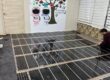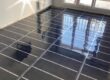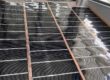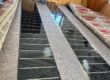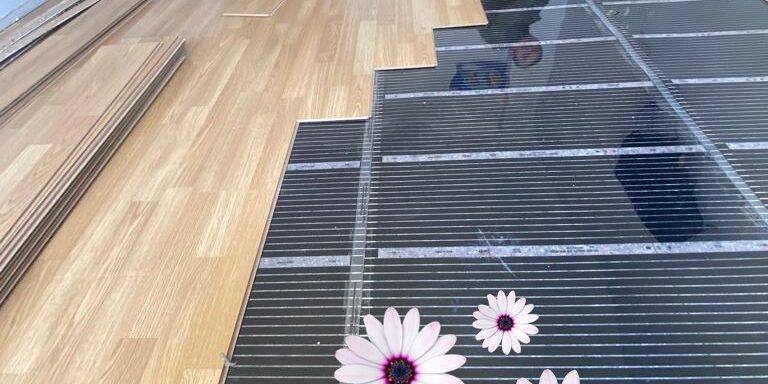
Glazed conservatories and enclosed balconies are the coldest parts of a home in winter. Underfloor heating is a good way to make these spaces usable. In this article we explain what to consider when choosing a carbon film heater for conservatory heating and enclosed balconies.
Why Are Conservatories Hard to Heat?
- Large glazed areas: Glass loses far more heat than walls.
- Uninsulated floors: Balcony slabs are often in direct contact with outside air.
- Air leaks: Sliding systems and profile joints can let air through.
- Moisture and condensation: Condensation forms on cold glass.
Insulate First
Before choosing a heater, make the following improvements – otherwise even a high-powered heater may be inadequate:
- Double or triple glazing and quality frames
- Thermal insulation below or above the floor slab (e.g. XPS board)
- Sealing of frames and joints

Choosing the Power
Because heat loss is high in conservatories and enclosed balconies, film power is chosen higher than for ordinary rooms:
| Space | Recommended Film Power |
|---|---|
| Enclosed balcony with double glazing and an insulated floor | 180 – 220 W/m² |
| Conservatory with large glazed areas | 220 – 240 W/m² |
| Uninsulated, single-glazed space | Underfloor heating alone may be insufficient; supplementary heating required |
For the calculation steps see sizing per square metre, and for wattage see our 180 W vs 240 W comparison.
Floor Coverings
- Laminate, deck-effect laminate or carpet: Suitable for carbon film.
- Ceramic tile or stone: A heating mat or heating cable should be used instead of carbon film. Details: parquet, tiles and laminate.
Moisture and Safety Precautions
- Use a moisture barrier above and below the film.
- Take precautions against water splashes where plants are watered; never place plant pots directly on the film area.
- Always protect the circuit with a 30 mA RCD.
- Use a thermostat with a floor sensor – the floor can heat up quickly on sunny days.
Supplementary Solutions
Supplementary heaters such as infrared panels can be used near the glazing to counter cold downdraughts. For a comparison, see carbon film vs infrared panel.
Frequently Asked Questions
Is carbon film alone enough for an enclosed balcony?
It is usually sufficient for balconies with double glazing and an insulated floor. Uninsulated spaces may need supplementary heating.
Is heating a conservatory expensive?
Because heat loss is high, it costs more than an ordinary room. Use our electricity consumption guide to estimate.
Conclusion
In conservatories and enclosed balconies, carbon film delivers efficient heating with proper insulation, a higher power density, a suitable floor covering and moisture precautions. Contact us for a site survey and quotation.