Mosque heating is one of the most challenging heating problems because of the high ceilings and large volume. With systems that heat the air, warm air rises into the dome while the floor where the congregation sits stays cold. In this article we compare mosque heating methods and explain why under-carpet carbon film systems stand out and how they are installed.
Mosque Heating Methods
Heating methods used in mosques fall into two main groups:
- Systems that heat the air: Stoves, central heating radiators, fan heaters and air conditioners.
- Systems that heat the floor: Wet underfloor heating and electric under-carpet heating (carbon film or heating cable).
Stoves and Radiators
Although stoves are still used in small village mosques, they are increasingly being abandoned because of fuel costs, ash, soot and constant maintenance. Radiators heat the air in front of the walls; warm air quickly rises into the dome and most of the heat remains in the upper space, away from the congregation.
Underfloor (Under-Carpet) Heating
During prayer, worshippers are in direct contact with the floor. That is why the most efficient method for mosques is to heat the floor, not the air. Under-carpet heating delivers heat exactly where it is needed – the surface where the congregation sits and prostrates.

Why Do Mosques Struggle to Stay Warm?
- High ceilings and domes: The volume of air to be heated is very large.
- Frequently opened doors: Doors open and close constantly at prayer times, letting cold air in.
- Uninsulated floors: Especially in older mosques, cold from the floor passes straight into the carpet.
- Irregular use: Mosques are used intensively at certain times of day; systems that run continuously waste energy.
Mosque Under-Carpet Heating with Carbon Film
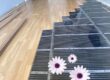
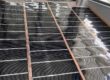
Carbon film heaters consist of conductive carbon strips laminated between two polymer layers. Copper busbars along the edges distribute electricity to the film, which produces even heat across its entire surface. Just a fraction of a millimetre thick, it is laid beneath the existing carpet without breaking up the floor.
Film quality depends on the uniformity of the carbon layer, the cross-section of the copper busbar and the insulation layers. Cheap, low-quality films can lose power over time or develop hot spots, so it is important to use certified products. For more on carbon film, see the benefits of carbon film underfloor heating.
Advantages of Mosque Under-Carpet Heating
Economical Operation
Because the system heats only the floor where the congregation is, there is no need to heat the volume of the dome. A timed thermostat and control panel switch the heating on automatically before prayer times and off after the congregation leaves.
Zone Control
Films are supplied row by row, so only occupied rows or specific sections can be heated – the whole area for Friday and Eid prayers, and just the front rows for daily prayers.
Even Heat Distribution
The same floor temperature is achieved throughout the mosque, with no cold areas by the doors or walls.
Savings in Maintenance and Time
No fuel to carry, stoves to light or boilers to maintain. Staff simply set the thermostat schedule.
A Clean, Quiet Environment
No fan noise, soot, odours or dust-raising air currents – the tranquillity of the place of worship is preserved.
How Is Mosque Under-Carpet Heating Installed?
- Survey and calculation: The mosque’s net carpeted area, row layout and electrical infrastructure are examined and the required power is calculated.
- Lifting the carpets: Carpets are rolled up and the floor cleaned. No nails are driven into the floor, and the existing floor is not damaged.
- Insulation layer: Insulation felt is laid to prevent heat escaping into the floor, with a polythene sheet as a moisture barrier.
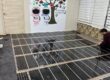
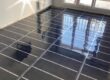
- Laying the films: Carbon films are laid out according to the row dimensions and secured.
- Connections and panel: Each row is supplied by its own circuit, connected to an RCD-protected control panel.
- Testing and relaying the carpets: After insulation and function tests, the carpets are laid back down.

What Determines the Cost of Mosque Heating?
The cost of mosque under-carpet heating depends on the net area to be heated, the quality and power of the film, the number of control panels and thermostats, and whether the existing electrical infrastructure is sufficient. Running costs depend on hours of use and the mosque’s insulation. We explain how installed power and the control panel are determined in mosque under-carpet heating power calculation and control panel, and how monthly consumption is calculated, with examples, in mosque under-carpet heating electricity consumption.
In large mosques, the adequacy of the electrical supply capacity must be checked during the survey. If necessary, the system is divided into zones to limit the power drawn at any one time.
Frequently Asked Questions
Will under-carpet heating damage mosque carpets?
No. The thermostat and floor sensor keep the surface temperature at a level that will not harm the carpet.
Can it be installed under existing carpets?
Yes. The carpets are lifted, the film is laid and the same carpets are relaid.
How long does installation take?
In a medium-sized mosque, installation is usually completed within a few days.
Can only certain rows be heated?
Yes. Thanks to row-based circuit design, only the sections in use can be switched on.
Conclusion
Under-carpet carbon film heating delivers heat where the congregation is – a programmable, clean and maintenance-free solution. For other underfloor heating options, see underfloor heating systems. Contact us for a free survey and quotation for mosque underfloor heating installation and materials.