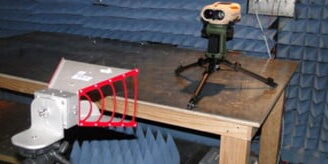
The terms EMC and EMI are often used interchangeably in electronic product testing and certification. Yet they are not the same thing: EMI describes a problem, while EMC describes a product’s compatibility in the face of that problem. In this article you will find both concepts, the difference between them, the main types of test and practical tips for EMC-compliant product design.

What Is EMI?
EMI (electromagnetic interference) is unwanted electromagnetic energy that disrupts the operation of an electronic device. Every electronic circuit emits some electromagnetic energy as its currents and voltages change. This energy can reach other devices through the air by radiation or along cables by conduction.
EMI sources can be natural, such as lightning and solar storms, but most often the source is another electrical device. Switch-mode power supplies, motor drives, welding machines, relays and LED drivers are the most common sources of EMI.
What Is EMC?
EMC (electromagnetic compatibility) is the ability of a device to operate as intended in its electromagnetic environment without disturbing other devices in the same environment. EMC has two aspects:
- Emissions: How much electromagnetic noise the device emits.
- Immunity: How resistant the device is to external noise.
The Difference Between EMC and EMI
| Feature | EMI | EMC |
|---|---|---|
| Meaning | Electromagnetic interference (the problem) | Electromagnetic compatibility (the goal) |
| Focus | The unwanted noise itself | The product neither generating nor being affected by noise |
| What is measured | Radiated and conducted noise levels | Compliance with emission limits and immunity performance |
| Example | A motor causing interference on a radio | A motor drive filtered to stay below standard limits |
In short, EMI is the problem to be solved; EMC is the product behaving in compliance with standards in the face of that problem.
How Are EMC Tests Carried Out?
Emission Tests
Emission tests use receiving antennas, LISNs (line impedance stabilisation networks), preamplifiers and EMI receivers or spectrum analysers. Measurements are made in semi-anechoic chambers or at open-area test sites. There are two main measurements:
- Conducted emissions: Noise fed back into the mains via power and signal cables.
- Radiated emissions: Noise radiated into the air from the device and its cables.
Immunity Tests
In immunity tests, the device is exposed to controlled disturbances and monitored for any malfunction. Common tests include:
- Electrostatic discharge (ESD) – EN 61000-4-2
- Radiated RF field immunity – EN 61000-4-3
- Electrical fast transients / burst (EFT) – EN 61000-4-4
- Surge – EN 61000-4-5
- Conducted RF immunity – EN 61000-4-6
- Voltage dips and interruptions – EN 61000-4-11
The applicable standards depend on the product group. For example, the EN 55014 series applies to household appliances and EN 55032/EN 55035 to multimedia equipment. To carry the CE mark in the European Union and Türkiye, products must meet the requirements of the EMC Directive (2014/30/EU).
Designing Products for EMC
Solving EMC problems after a product is finished is both expensive and difficult, so EMC must be considered from day one of the design. EMC-compliant design rests on three core techniques:
- Filtering: Conducted noise is suppressed with an EMI filter at the mains input and ferrites and RC filters on signal lines.
- Shielding: Radiated noise is limited with metal enclosures, shielded cables and shielded connectors.
- Grounding: A continuous ground plane and correct grounding points give noise currents a short, controlled return path.
EMC Tips for PCB Design
- Keep high-frequency current loops (especially in switching circuits) as small as possible.
- Use a continuous ground layer on multi-layer boards; do not route signals over a split ground.
- Place decoupling capacitors close to the supply pin of every IC.
- Do not make the edge rates of fast signals faster than necessary.
- Filter every cable connection leaving the board.
- Carry out pre-compliance testing at the prototype stage.
We list the software you can use for board design in our article on circuit design software.
Frequently Asked Questions
What do EMC and EMI stand for?
EMC stands for electromagnetic compatibility; EMI stands for electromagnetic interference.
Is EMC testing mandatory?
For most electrical and electronic products placed on the EU and Turkish markets, EMC compliance is a mandatory part of CE marking.
How do you fix a product that fails EMC testing?
First, the noise source and propagation path are identified. Filtering, shielding, grounding or the PCB layout are then improved and the product is retested.
Conclusion
EMI is unwanted electromagnetic noise; EMC is a product keeping that noise within limits and remaining unaffected by it. Planning for EMC from the start of the design significantly reduces testing and redesign costs. Contact us about our EMC-compliant electronic circuit and PCB design service, or for support with your product’s certification process.