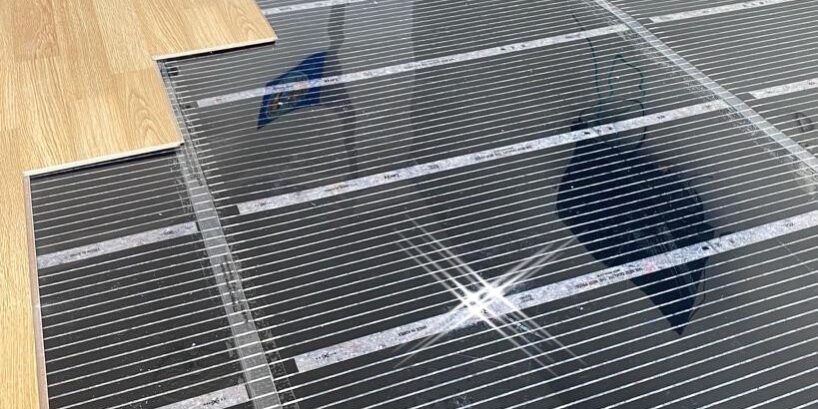
Underfloor heating systems turn the entire floor into a large, invisible heat emitter using pipes, heating cables or carbon films installed beneath it. Because heat rises evenly from below, they provide more balanced comfort than radiator systems. In this article you will find out what underfloor heating is, how it works, which types exist and how a correct design should be carried out.
What Is Underfloor Heating?
Underfloor heating is a central or zoned method of heating a space through its floor. Because the heating element sits beneath the floor covering, there are no visible radiators or stoves in the room, leaving walls and furniture layout completely free.
The most suitable system for you depends on whether the project is a new build or a renovation, your existing heating infrastructure, your energy source and your floor covering.
How Does Underfloor Heating Work?
The heating elements beneath the floor warm the floor, which then releases heat into the room as radiant heat. Because the heated surface is so large, the floor needs to be only a few degrees warmer than the room.
As a result, wet systems run at much lower water temperatures than radiators, and efficiency increases significantly when combined with a heat pump. There are also no cold spots in the room, and warm air does not collect at the ceiling.
Types of Underfloor Heating Systems
Underfloor heating systems fall into two main groups: wet (hydronic) and electric systems.
1. Wet Underfloor Heating
Water heated by a combi boiler, boiler or heat pump circulates through flexible pipes laid in the floor. It is usually installed in new buildings before the screed is poured. Running costs are low, but initial installation requires more labour and floor height.
2. Cable Underfloor Heating
Special heating cables or heating mats are embedded in screed or tile adhesive. Ideal for bathrooms, kitchens and tiled areas. For details, see our cable underfloor heating guide.
3. Carbon Film Underfloor Heating
Very thin carbon heating films are laid under parquet, laminate or carpet. Because no screed is required, it is a fast, clean solution for renovations. We explain its advantages in detail in the benefits of carbon film underfloor heating.
4. Screedless Systems
Systems installed on thin insulation plates without pouring screed. They add very little floor height and can be used straight away. For installation steps, see how to install screedless underfloor heating.
Advantages of Underfloor Heating
- Even heat distribution: Feet stay warm and the head cool – the most comfortable profile for the human body.
- Energy efficiency: The same comfort is achieved at a lower thermostat setting.
- Space saving: No radiators or units on the walls.
- Quiet, clean operation: Less air circulation means less dust is moved around.
- Room-by-room control: Each room can be set to its own temperature with its own thermostat.
To compare underfloor heating with radiators in terms of cost and comfort, read underfloor heating vs radiators.
How Should Underfloor Heating Be Designed?
Whether underfloor heating performs as expected depends on correct engineering design. A good design includes the following steps:
- Heat-loss calculation: Wall, window and floor losses are calculated separately for each room.
- Power and layout plan: The required W/m² is determined, and pipe or cable spacing is drawn accordingly.
- Compatibility with the floor covering: The right heater type and surface temperature are chosen for tiles, parquet or carpet.
- Control system: Overheating is prevented with room thermostats and floor sensors.
- Installation drawings: The installation team is given detailed pipe/cable layouts and wiring diagrams.
Because the right amount of material is calculated, waste is reduced and the system reaches the desired temperature without wasting energy. For electric systems, use our underfloor heating electricity consumption guide to see your monthly consumption in advance.
Where Is Underfloor Heating Used?
As well as homes, villas, bathrooms and conservatories, it is popular in large, high-ceilinged spaces. In mosque heating and office heating applications, for example, underfloor heating stands out because it directly heats the level where the congregation or staff are.
Frequently Asked Questions
Can underfloor heating be used with any floor covering?
It works well with ceramic tiles, natural stone, laminate and parquet approved for underfloor heating. Thick carpets and coverings with high thermal resistance reduce efficiency.
Is underfloor heating enough on its own?
In an adequately insulated building, yes. In poorly insulated buildings, supplementary heating can be planned based on the heat-loss calculation.
Can underfloor heating be installed in an existing home?
Yes. Carbon film and screedless systems can be installed in existing homes without breaking up the floor or with minimal increase in floor height.
Conclusion
Underfloor heating is a modern solution that offers comfort, aesthetics and – when correctly designed – energy efficiency. We can work out together which of the wet, cable or carbon film options suits your project. Contact us for a free preliminary assessment and quotation for your villa, home or commercial project.