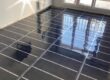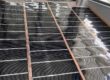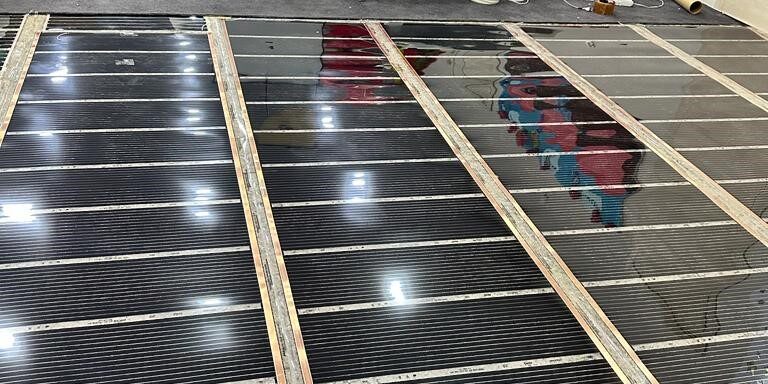
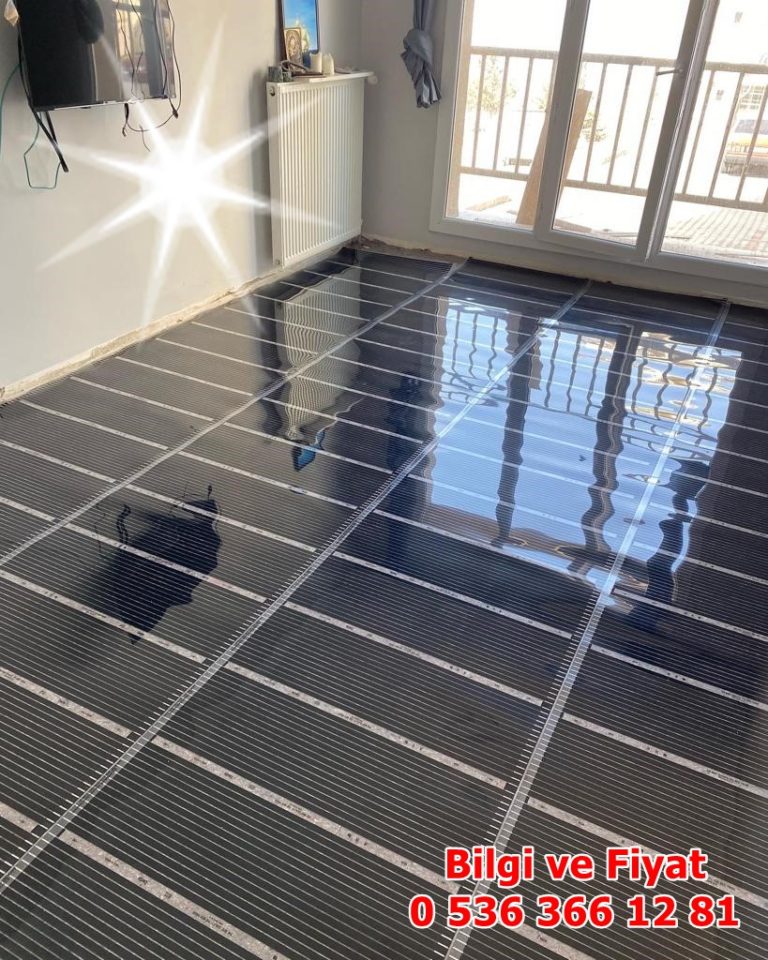
A carbon film heater is a thin, flexible electric heating element just a fraction of a millimetre thick. Laid under carpet, parquet or laminate, it turns the floor into a large, gentle heat emitter. In this article we explain what a carbon film heater is, how it works, its technical specifications and where it is used.
What Is a Carbon Film Heater?
A carbon film heater consists of conductive carbon strips printed between two layers of durable polyester (PET) film. Copper busbars (silver-enriched on some products) run along both edges of the film and distribute the current to the carbon strips.
It is usually sold in rolls 50, 80 or 100 cm wide. The length is adjusted to suit the room by cutting along the marked cutting lines.

How Does a Carbon Film Heater Work?
When the film is connected to the mains, current flows from the copper busbars into the carbon strips. The carbon converts electrical energy into heat, which spreads evenly across the whole surface of the film. The warm film heats the floor covering above it, and the floor then releases heat into the room mainly as radiant (far-infrared) heat.
With radiant heating, surfaces and people in the room warm up first rather than the air. As a result, the same level of comfort is achieved at a lower thermostat setting than with systems that heat the air.
The Role of the Thermostat
A carbon film heater should always be used with a thermostat. The thermostat measures the room or floor temperature, cuts power to the film when the set point is reached and switches it back on as the temperature drops. The film therefore runs intermittently rather than continuously, and consumption matches the room’s heat loss. For help choosing the right thermostat, see our carbon film heater thermostat guide.
Technical Specifications
| Specification | Typical Value |
|---|---|
| Thickness | Approx. 0.3 – 0.4 mm |
| Width | 50 / 80 / 100 cm |
| Power density | Approx. 110 – 220 W/m² (depending on product) |
| Operating voltage | 220 – 230 V AC |
| Heat emission | Mainly far-infrared radiation |
| Control | Thermostat with room and/or floor sensor |
Values vary by manufacturer; always check the product label and datasheet before choosing.
Advantages of Carbon Film Heaters
- Ultra-thin: Adds almost nothing to floor height; no screed required.
- Fast installation: An average room can usually be completed in a day.
- Even heat: Heat spreads evenly across the floor, leaving no cold corners.
- Silent and maintenance-free: No fans, pumps or moving parts.
- Zone control: Each room or zone can be controlled by its own thermostat.
For a detailed look at the benefits, read our article on the benefits of carbon film underfloor heating.
Where Are Carbon Film Heaters Used?
- Homes: Under carpet or parquet in living rooms, bedrooms and children’s rooms.
- Mosques and places of worship: Row-by-row heating of large carpeted areas. See our article on mosque heating for details.
- Schools and nurseries: In areas where children play on the floor.
- Offices and shops: Where radiators are not wanted.
- Prefabricated and timber buildings: On lightweight floors where screed cannot be poured.

Which Floor Coverings Are Suitable?
Carbon film is most often used under carpet, laminate and parquet. For ceramic tile and stone floors, a heating cable or heating mat embedded in the tile adhesive is usually preferred. We compare the two in carbon film heater vs electric underfloor heating. For advice on carpet types, see this guide.
Frequently Asked Questions
How much electricity does a carbon film heater use?
Consumption depends more on the room’s heat loss and hours of use than on the film’s rated power. We explain the bill calculation step by step in carbon film heater electricity consumption.
Is a carbon film heater safe?
Yes – with correct installation, a thermostat and residual current (RCD) protection. For details, read are under-carpet heaters safe?
Can I install a carbon film heater myself?
Laying the film may look simple, but the electrical connections, insulation and protective devices require expertise. We recommend that all connections are made by a qualified electrician. See our installation guide for the steps.
Conclusion
With its thin profile, fast installation and even heat distribution, the carbon film heater suits everything from homes to mosques. With the right power rating, a suitable thermostat and professional installation, it will run trouble-free for many years. Contact us for a materials and installation quotation for your project.