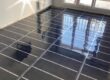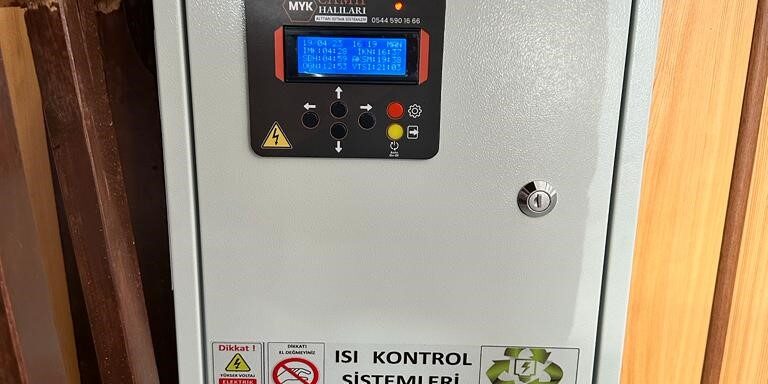
The safety, comfort and running cost of a carbon film heater depend to a large extent on the thermostat. The wrong thermostat can cause overheating, frequent faults or unnecessary consumption. In this technical guide we explain what to look for when choosing a carbon film heater thermostat: current rating, sensor type, control modes and wiring.
1. Current and Power Rating
The most critical specification of a thermostat is the maximum current it can switch. Its contact rating must exceed the total current of the connected heater.
Current (A) = Total power (W) ÷ 230 V
| Thermostat Contact Rating | Approx. Maximum Load (230 V) | Recommended Continuous Load (80%) |
|---|---|---|
| 16 A | 3.68 kW | ≈ 2.9 kW |
| 25 A | 5.75 kW | ≈ 4.6 kW |
| 32 A | 7.36 kW | ≈ 5.9 kW |
Because heaters run at full load for long periods, using the thermostat at around 80% of its rating rather than at its limit extends contact life. For larger loads, the thermostat should drive a contactor, with the heater load supplied through the contactor.
Example: a 20 m² room with 14 m² × 220 W/m² = 3.08 kW installed power draws about 13.4 A. A 16 A thermostat would be at its limit, so a 25 A or 32 A thermostat is safer. For high-current applications, see our 32 A room thermostat.

2. Sensor Type and Control Mode
- Air sensor (A mode): The thermostat works on room air temperature. Easy to install, but it does not limit floor temperature.
- Floor sensor (F mode): Works on a sensor beneath the floor. Floor temperature is controlled, but room temperature is not monitored.
- Air + floor limit (AF mode): Works on room temperature but cuts the heater if the floor exceeds the set limit. This is the most recommended mode under carpet and parquet.
Floor sensors are usually NTC type, and their resistance varies by brand (e.g. 10 kΩ). Always make sure the sensor is compatible with the thermostat – an incompatible sensor gives incorrect readings.
3. Programming Features
- Manual thermostat: Simple and economical; for spaces kept at a constant temperature.
- Weekly programmable thermostat: Different temperatures by day and time; the best balance of savings and price.
- Wi-Fi (smart) thermostat: Remote control by phone, consumption monitoring and scenes. Makes scheduled operation easy for mosques and offices.
We show the effect of scheduled use on your bill with examples in our electricity consumption guide.
4. Additional Technical Features
- Hysteresis (dead band): Sets how many degrees of difference trigger switching. Too narrow wears the relay; too wide reduces comfort. 0.5–1 °C is ideal.
- Calibration: Ability to offset the measured temperature.
- Frost protection: Maintains a minimum temperature in unused areas.
- Child lock: Prevents settings from being changed in public spaces.
- Mounting type: Flush (in a wall box), surface or panel (DIN rail) mounting.
5. Wiring and Protection
- The thermostat circuit should be supplied through its own circuit breaker and a 30 mA RCD.
- Loads exceeding the thermostat’s current rating must be switched via a contactor.
- In large areas (mosques, schools), each zone should be controlled by its own thermostat or panel. For an example panel layout, see mosque power calculation and control panel.
- Connections must be made by a qualified electrician in accordance with the manufacturer’s wiring diagram.
Thermostat Selection Checklist
- Is the contact rating at least 1.25 times the total load current?
- Does it have a floor sensor and support AF mode?
- Is the sensor type compatible with the thermostat?
- Do the weekly programming or Wi-Fi features meet your needs?
- Does it carry a CE mark and come with a warranty?
Frequently Asked Questions
Can a carbon film heater be used without a thermostat?
No. Running without a thermostat greatly increases consumption and creates a risk of overheating. See are under-carpet heaters safe? for details.
What should the floor temperature limit be?
Under carpet and parquet, a limit of 27–29 °C is generally recommended. Always follow the maximum surface temperature specified by the flooring manufacturer.
Can several rooms be connected to one thermostat?
Yes, if the current rating is sufficient – but every room will then be at the same temperature. A thermostat per room is recommended for comfort and savings.
Conclusion
The right thermostat has sufficient current capacity, a floor-limited AF mode, a compatible sensor and programming features that match your needs. Contact us for help choosing the right thermostat and control panel for your project.