One of the most common questions before buying a carbon film heater is: can a carbon film heater be used under any carpet? The answer is no. A carpet’s thickness, backing material and thermal resistance directly affect both heating efficiency and safety. In this article we explain which carpets are suitable, which to avoid and what to watch out for.
How Carpet Affects Heating: Thermal Resistance
A carpet acts as an insulating layer between the film and the room. How well it lets heat through is expressed as its thermal resistance (m²K/W, also shown on carpet labels as a “Tog” value). As thermal resistance increases:
- the room takes longer to warm up;
- the film runs for longer and consumption rises;
- the risk of heat building up between the carpet and the film increases.
For underfloor heating, the thermal resistance of the floor covering should generally not exceed 0.15 m²K/W (about 1.5 Tog). If an additional underlay is placed under the carpet, the combined value must be taken into account.

Carpets Suitable for Carbon Film
- Thin to medium woven carpets: Such as machine-made carpets and mosque carpets.
- Jute- or cotton-backed carpets: Let heat through well and are not affected by warmth.
- Short-pile wool and acrylic carpets: Heat-resistant and comfortable.
- Carpets and fitted carpets labelled as suitable for underfloor heating: Those approved by the manufacturer.
Carpets to Avoid
- Rubber-, latex- or PVC-backed carpets: Can soften with heat, give off odours and trap heat.
- Very thick, long-pile (shaggy) carpets: High thermal resistance.
- Carpets with thick foam or felt backing: Trap heat underneath.
- Non-slip plastic underlays: Should never be placed between the heater and the carpet.
- Heat-sensitive synthetic and glued-back products: Do not use them unless the label states they are suitable for underfloor heating.

What to Watch Out for Under Carpet
- Correct film power: Films of 150–220 W/m² are typically used under carpet; excessive power is unnecessary.
- Thermostat with floor sensor: Use an AF-mode thermostat that limits floor temperature. See our thermostat guide.
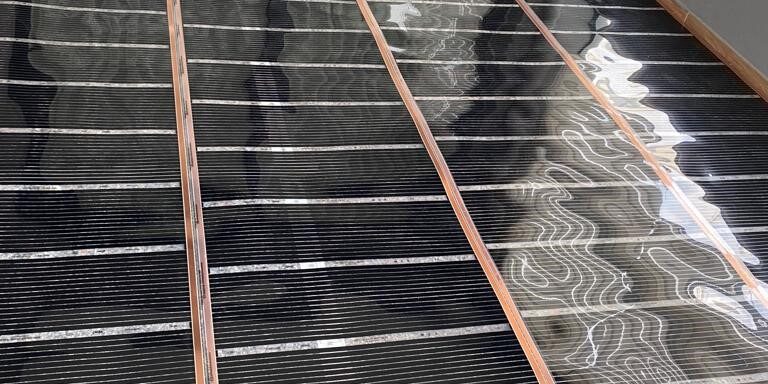
- Underlay insulation: Lay thermal insulation felt beneath the film; a thin protective sheet can be added on top if required.
- Prevent trapped heat: Do not place floor mattresses, thick cushions or furniture with closed bases on the carpet.
- Take care when fixing the carpet: Never drive nails or staples into the film area.
- Cleaning: Do not wet-clean the carpet in place; if wet cleaning is necessary, switch the system off and dry the carpet completely.
We have gathered all the safety rules in are under-carpet heaters safe?
What If a Carpet Is Laid Over Parquet or Laminate?
If the film is laid under parquet or laminate and a rug is placed on top, the thermal resistance of both layers adds up. In this case choose thin rugs and set the floor temperature limit according to the parquet manufacturer’s specification. For flooring options, see our comparison carbon film vs electric underfloor heating.
Frequently Asked Questions
Are mosque carpets suitable for carbon film?
Yes. Mosque carpets are usually of medium thickness and let heat through well, making them one of the best applications for carbon film.
Will an under-carpet heater fade or damage my carpet?
With the surface temperature limited by a thermostat and floor sensor, no fading or damage is expected on suitable carpets. Rubber-backed carpets, however, may be affected.
Can I put a non-slip underlay under the carpet?
Thin underlays specified as suitable for underfloor heating can be used. Avoid thick foam and plastic underlays.
Conclusion
Carbon film heaters cannot be used under every carpet; thin to medium carpets with natural or heat-resistant backing give the best results. Avoiding rubber/PVC-backed and very thick carpets improves both efficiency and safety. Contact us for a solution that suits your space and your carpet.