The two options most often compared by people who want to heat with electricity are carbon film heaters and air conditioners. Both use electricity, but they produce and deliver heat in completely different ways. In this article we compare the two in terms of efficiency, cost, comfort and use.
The Difference in Operating Principle
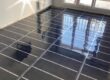
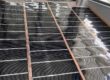
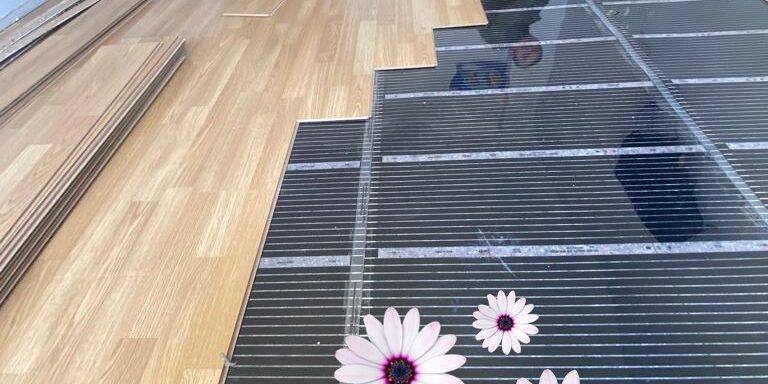
- Carbon film heater: A resistive heater that converts electricity directly into heat, delivered from the floor mainly as radiant heat.
- Air conditioner (heat pump): Uses a compressor to move heat from the outdoor air indoors. It can produce several times more heat than the electricity it consumes, and delivers it by blowing warm air.
Comparison Table
| Criterion | Carbon Film Heater | Air Conditioner (Inverter) |
|---|---|---|
| Heat produced per 1 kWh of electricity | ≈ 1 kWh | ≈ 2–4 kWh depending on outdoor temperature |
| Performance in cold weather | Unchanged | Falls as outdoor temperature drops |
| Heat distribution | From the floor, even | From above; warm air collects at the ceiling |
| Air movement and dryness | Virtually none | Draughts, dust circulation and a feeling of dryness |
| Noise | Silent | Indoor and outdoor unit noise |
| Maintenance | Practically none | Filter cleaning, periodic servicing |
| Cooling | No | Yes |
| Visibility | Completely hidden | Wall unit and outdoor unit on the façade |

Cost Comparison
For the same heat demand, an efficient inverter air conditioner uses less electricity than carbon film in mild weather. For example, if a room needs 12 kWh of heat per day:
- Carbon film: ≈ 12 kWh of electricity
- Air conditioner (assuming an average coefficient of performance of 3): ≈ 4 kWh of electricity
In practice, however, the gap narrows due to several factors:
- With underfloor heating, the same comfort is usually achieved at a room temperature 1–2 °C lower.
- Air-conditioner efficiency drops in very cold weather.
- Carbon film can be zoned to heat only the areas in use.
- Air conditioners have higher maintenance and initial investment costs.
You can estimate carbon film consumption for your own space with our bill calculation guide.
Which Is Right for Whom?
Choose a carbon film heater if:
- you want silent, draught-free comfort from the floor;
- you are heating areas where people sit on the carpet (mosques, children’s rooms);
- an outdoor unit cannot be installed or you want no maintenance.
Choose an air conditioner if:
- you also need cooling in summer;
- the lowest running cost is your priority and the climate is mild.
Using both
Many homes use an air conditioner for main heating and cooling, together with carbon film for floor-level comfort and warm feet. For a similar comparison, see carbon film vs infrared panel.
Frequently Asked Questions
Is carbon film more expensive to run than an air conditioner?
In terms of heat produced per kilowatt-hour, an air conditioner is more efficient. However, comfort, zoned use and maintenance advantages all affect the total cost.
Does carbon film dry the air?
Because it does not blow air, it creates far less of a feeling of dryness than an air conditioner.
Conclusion
An air conditioner produces more heat per unit of electricity, while carbon film offers silent, maintenance-free, even comfort from the floor. The right choice depends on climate, usage and comfort expectations. Contact us for the most suitable solution for your space.