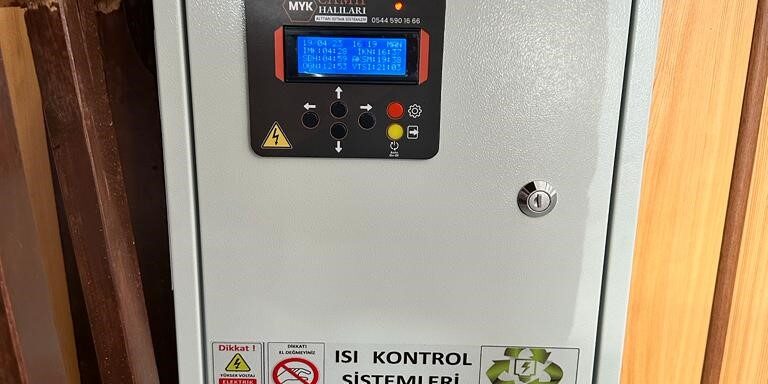
A carbon film heater floor sensor is a small sensor that measures the temperature of the floor where the film is laid. A room thermostat only knows the air temperature; the floor sensor shows what is happening beneath the floor covering. In this article we explain why the floor sensor matters and how to position it.
What the Floor Sensor Does
- Prevents overheating: Switches the film off when the floor temperature exceeds the set limit, regardless of room temperature.
- Protects the floor covering: Ensures parquet and laminate do not exceed the temperature allowed by the manufacturer.
- Guards against trapped heat: Limits temperature rises in areas where items are placed on the floor.
- Improves comfort: Keeps the temperature you feel underfoot constant.

Thermostat Control Modes
| Mode | How It Works | Assessment |
|---|---|---|
| A (air) | Room temperature only | Floor temperature is unlimited |
| F (floor) | Floor temperature only | Room temperature is not monitored |
| AF (air + floor limit) | Works on room temperature without exceeding the floor limit | Best under carpet and parquet |
For detailed selection criteria, see our thermostat guide.
How to Position the Floor Sensor
- Place the sensor in the gap between two film strips, or close to the film as recommended by the manufacturer.
- Choose a representative spot not too close to walls, doors or windows.
- If possible, install it in a thin protective conduit so it can be replaced without lifting the floor.
- Do not run the sensor cable over the heater supply cables.
Sensor Type and Compatibility
Floor sensors are usually NTC type, with a resistance that varies by brand (e.g. 10 kΩ). A thermostat measures correctly only with its own sensor type; a different sensor will show the wrong temperature. If the sensor cable needs extending, use cable that complies with the manufacturer’s instructions.
Recommended Floor Temperature Limits
- Under carpet: 27–29 °C
- Laminate and parquet: usually 27 °C (follow the manufacturer’s value)
See our surface temperature guide for details.
Signs of a Faulty Sensor
- An error code on the thermostat display (e.g. sensor open/short circuit)
- The film never runs, or never stops
- The displayed temperature is implausible
In this case, check the sensor’s resistance with a multimeter. For other faults, see carbon film heater not heating.
Frequently Asked Questions
Can carbon film be used without a floor sensor?
It can be used with an air sensor only, but a floor sensor is strongly recommended for safety under carpet and parquet.
How many square metres per sensor?
Each thermostat usually uses one floor sensor. Large areas should be divided into zones, each with its own sensor.
Conclusion
The floor sensor is the most important accessory for safe, comfortable operation of a carbon film heater. Used with an AF-mode thermostat, it protects both your floor covering and your system. Browse our thermostat products or contact us for a suitable thermostat and sensor.